Sandbagged!

Sandbagged!
Photograph by Steve Barnett

Wednesday, 24 April 2013

Another Delightful Tangle


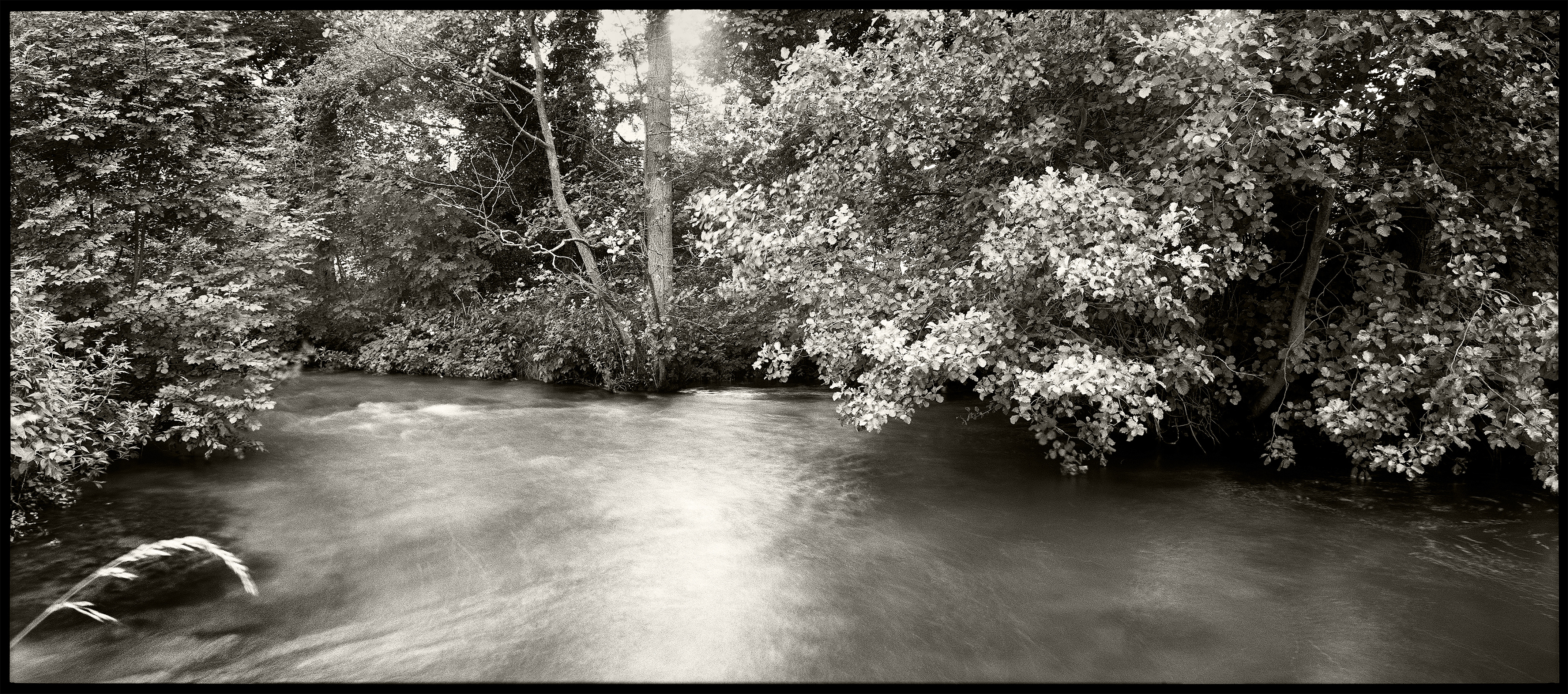
This was a 19 second exposure so the rises in between these protective fingers of willow didn't register on the film, but I'm sure you can understand why the default decision, when a tree falls into the river, is to leave it whenever possible.

(Remember to click on the photograph for a closer look.)


Regular Rod

Sunday, 21 April 2013

A View From The Other Side...

...Of The River!

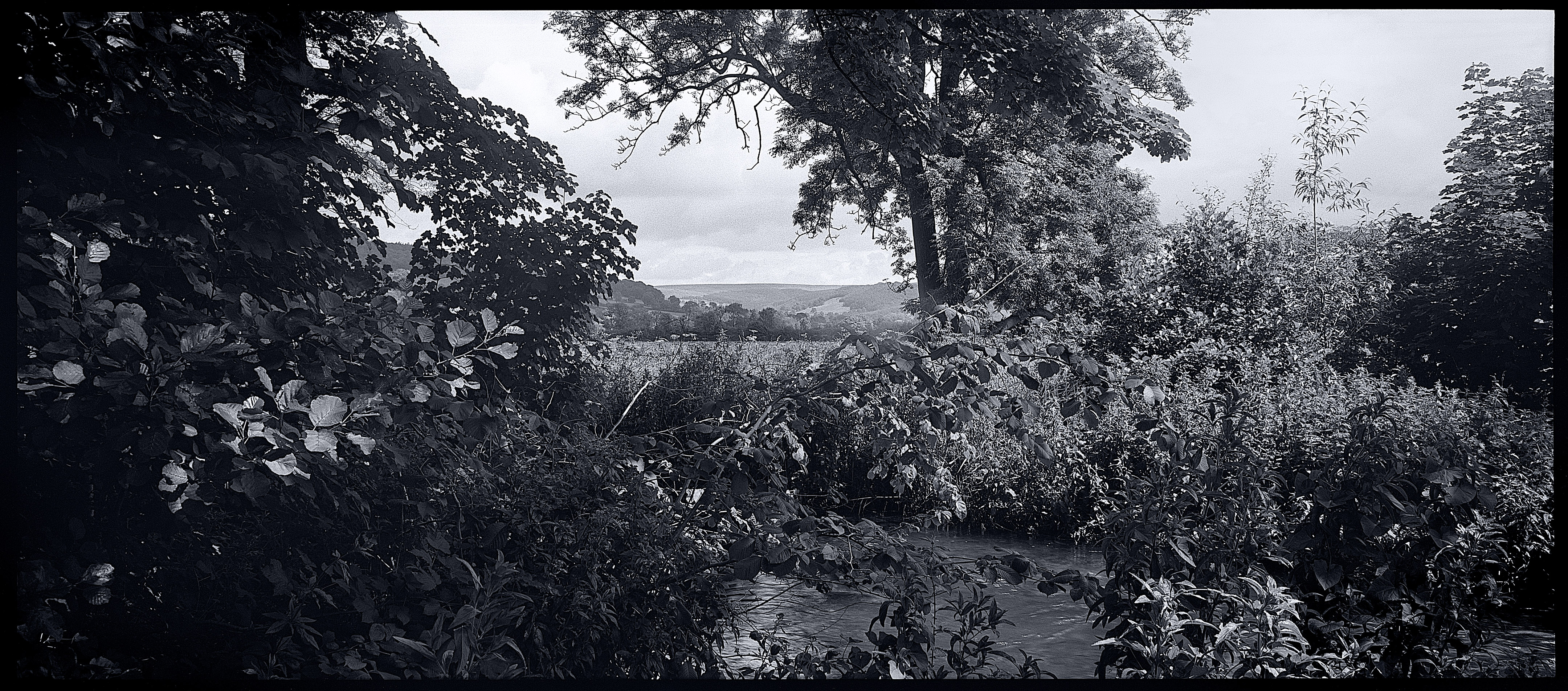
Wandered down to Duck Holds Wood on the Derbyshire Wye yesterday with you know who for company.  Only two exposures made this time and once again he matched them each time with a flotsam tennis ball.  We stayed on the right bank, taking advantage of the easy access due to low growth of vegetation so early in the season.  It was facinating to see the river from the usually unfished side and I found this scene. 


Usually I am sitting a few yards below the apex of that bend, side casting up to fish rising in the run coming down from the spot round the bend that, because you can pick and choose your fish there, I liken to an angler's version of Selfridge's Window...


Regular Rod

Wednesday, 17 April 2013

Tangles - I Love 'em

No not those horrid things that happen to your leader just when it is most inconvenient for you and the light is going.


I mean lovely tangles like this one here.  Such a lot is happening thanks to this example.  There is a scour forming that will create a deep hole for a big fish to live in and near.  There is a feed lane round the back of it, but how the Devil to fish it is yet to be worked out.  Trout will take station here.  Birds will nest on it.  It will maybe make a new piece of land one day - unless of course it is washed away in a brisk winter flood some dark and windy night.  In which case it will still leave a lovely deep scour in the gravel where once the water was only a few inches deep...


Regular Rod

Tuesday, 9 April 2013

Beauty...

...is in the eye of the beholder.


Severn Trent plc thinks it is okay to discharge untreated sewage into this river just a few yards to the left of the camera's viewpoint...

Regular Rod 

Thursday, 4 April 2013

Yet Another Thousand...

..."words"


There is something magical going on in the middle of this channel at the tail of Ogden Island.  Among the willow branches that fell here into the water, one of them has touched the river bed.  All sorts of debris has caught up on it to make a mid-stream "sieve".  After a couple of winters the floods have deposited silt into and onto this seive.  Look closely into the middle (click the picture for a closer view) and you can see that Fleur-de-Lys (Flag Iris) has taken hold and a healthy bunch of new shoots is already reaching skywards.  The shoots will put down roots (and rhizomes), which in turn will trap more silt.  This is an embryo of an island.  The currents around it will be very interesting in years to come and we can look forward to fish taking advantage of this new feature.  The woody debris will keep us honest.   Well it will at least ensure our casting is put to the test, even though the new feature will need only short casts to reach it...


Isn't Nature wonderful?   We lucky anglers get closer to it than most.


Regular Rod

Monday, 1 April 2013

All Fools' Day Antics...

Today it really was a proper All Fools' Day opening.  The windchill was supposedly minus 7˚C.  It felt colder than that to your faithful blogger...


This year is slow in getting out of winter and into spring and summer.  The snowdrops that are usually over and done with by late February are still in bloom.  The fly life cycle is like it would normally be on Christmas Day not Easter Monday.  Hands were already getting cold in the short time it takes to get tackled up,

I know most of you will be aware of this neat way to avoid the line falling back down the rod rings whilst threading your line, but I'm sure there will be one or two of you who are yet to try this easy solution, so here is a picture...


Simply fold the first inch or so of fly line back into a hairpin bend and thread it that way through the rings (guides in the USA).  If you inadvertantly let go it will jam in the ring and not slide all the way out again back down to the reel!  This can be very helpful if you are setting up in a confined space, like on a boat, where you may not have enough room to get the rod horizontal.

The only tactic that made any sense today was to go-a-searching with a bushy fly.  My choice was a Double Badger and at about 13:45 (BST) a trout grabbed it and immediately let go.  It was the first rise I'd seen and it was a tiny bit of encouragement that was just sufficient to stay motivated enough to fish on no matter what the wind was doing.


At one stage, being anxious to at least see a trout, I climbed a tree for a better view.  The gravel looking so lovely and the water with its usual gin like clarity was just too much for me to not get the camera out and take a quick snap...

Eventually, around 14:00, there were some flies on the water.  Hurray!  Now what are they? 


Large Dark Olive was the deduction and this was confirmed when I dipped my hand, palm downwards, under one as it drifted by my sitting position.  The little fly was gently snared in the hairs on the back of my hand and it lingered there long enough for me to get a clear look (and make a couple of photographs) confirming the deduction.


However, before there was time to change the fly to something more like a real Large Dark Olive, a fish rose less than three yards upstream of me.  It was too tempting...  The cast was made and Lo and Behold the first fish of the season was on and a moment or two later it was in my net!  Bless my soul!  The day is a success!


What lucky devils we are to be anglers!


Regular Rod

Thursday, 28 March 2013

A Resolution?

Not a New Year's Resolution but a resolution for life now.  You will recall the link to a video explaining how you can protect the waters you visit from infestation brought in on your clothing and gear

Just have a look at this blogpost from derwent~keeper.  It will make your hair curl!  http://derwentkeeper.blogspot.co.uk/2013/03/coming-to-river-near-you.html

This was the state of one Grafham angler's leg after stepping out of the famous reservoir's now, killer shrimp infested water.


If you are a traveling angler, please do take those simple but vital precautions before visiting each water.  Make it a serious resolution so to do.

Thank you.


Regular Rod

Wednesday, 20 March 2013

Pre-Season Peeping!

Or if we are allowed to be fancy, Reconnaissance?

Always worthwhile and anyway whilst out with Henry how could either of us stay away from the waterside?  It's in our DNA.  Henry to investigate and your faithful blogger has always been drawn to water, so it was inevitable on Monday that on our return home from a walk by the river our eyes caught sight of a splendid brown trout already on station. 


What was on the menu?  Damned if I could tell, but there it was, perfectly poised, ready for anything that drifted over and took its fancy.  A very encouraging sight.


More encouragement came again today, Wednesday, when wandering down the river Henry and I disturbed a Heron, which was standing well out from the opposite bank on some nice gravelly shallows.  What was Nog after?  An easy meal methinks!  The wild rainbow trout are on their redds now and there on the other side of the river, just where we had seen Nog, was a distinctive, cleanly-scraped patch of gravel.  All Nog had to do was wait until the rainbow trout were very preoccupied by each other and throwing a little of their usual caution to the winds.  Much easier to spear.  Nog has to eat.  The more cautious fish will avoid the Heron's spear of a beak and that is Nature's way...


Regular Rod

Saturday, 16 March 2013

Opening Day...

...opening cast?  Yes I've even decided where I will try to make my first cast to my first rising fish of the season in 16 days time.  Here is the very place, from a snap taken last July with a home-made camera.


Of course there will be nothing like the number of leaves on the trees this coming All Fools' Day and there will be barely anything on the banks to hide behind.  Sitting low and moving slowly will be the order of the day.  Nature gives us a nice example of perfect handicapping.  In our favour, the fish are easier to catch early on and the casting is easier with fewer things to snag up on.  In the fishes' favour, hiding ourselves is much harder at this time and so we are easier to detect by the fish.


Here is another spot that in summer was easy to hide within but in April demands an approach that would not be out of place in the Special Forces...

Be Stealthy!


Have you decided on your first foray yet?


Regular Rod

Saturday, 2 March 2013

A Thousand again...

Hoping you like it.  I couldn't resist the gestures these alders dead and alive seemed to be making in the misty morning.

Click the pic for a closer look.

Only 30 days to go now.


Regular Rod

Monday, 25 February 2013

A Lucky Escape...

...for NOW!

It has been a regular subject of contemplation for your faithful blogger that his Mother river, the Derbyshire Wye, is alive and well but like any living thing it is hanging by a thread.  That thread can be snapped at anytime.  A serpentine ribbon of slippery road, the A6, runs down the valley by the side of this river for much of its length.  All it would take is for one of the many trucks that run the A6, hauling oil or chemicals, to have a mishap and roll over into the river and that will be that for decades.  There would be no quick fix.  It would take a very long time for the river to recover and many of us would lose the bulk of our dry fly fishing, in some cases for the rest of our lives.

Another weighty threat that could easily snap the thread is lurking in the many farms that are to be found all along the catchment.  Wise advice written 2,000 years ago tells us to judge folk by their actions and not their words.  Much is made of the farmers' bond with the English countryside and how we would lose most of it if the honest sons of the soil were not here to farm it.  However, actions speak louder than all the nice words we hear and those actions can be pretty harmful.  The tragedy waiting to happen, when it comes, will most likely be the result of neglect, idleness, a blatant disregard of the law and dereliction of duty by the regulating authority, the Environment Agency (EA), in not enforcing the regulations governing the storage of slurry.  Here is an unvarnished account of something that happened on Friday 22nd February 2013...

Pig Slurry!

Pure luck and nothing else seems to have saved the fish for now, we will have to see what the algal blooms are like later this year thanks to this massive influx of eutrophicating material.  If this discharge had happened in summer, during drought conditions.  That would have been that and all the mountains of work done by the keepers over the years to make the Derbyshire Wye the glorious river it is and should be, would be snuffed out in one gruesome, grey, stenching mess that would take a lifetime to recover from, if indeed it ever did recover.  This was not an accident!  It was bound to happen, but it should have been impossible for it to happen

What can be done to make the river a little safer? 

The EA officers should be out there tomorrow morning, visiting every farm within the catchment to conduct surveys and risk assessments at each site and enforcing the law as they should already have done before now.  There was no need for this slurry tank to have failed so catastrophically, if it had been constructed in accordance with the law and if the site was properly bunded sufficiently well to have contained at least 120% of the slurry tank's contents, again in accordance with the law! 

Here's another Gateway to Heaven.  Let's hope that it is never turned into the gates of Hell...


Regular Rod

Friday, 22 February 2013

Please watch this video!

Biosecurity should be a serious concern for anglers in the UK.  This is not closing the stable door after the horse has bolted.  Yes the invasive shrimps are now here, estimated to have been imported in the bilges of sailing craft after trips to Europe.  There are dangerous vectors, which distribute these aliens, such as pleasure craft, including yachts and canoes; fish farmers, as they distribute stock fish; and...  anglers!  Yes anglers.  We can spread disease and pestilence just as these other folk can.  The big differences between us and the other folk are, first of all we actually give a damn my Dear, and secondly we can do something about it.  We might not stop the other water users from distributing these unwanted visitors but we can stop ourselves and we can do this easily.

Stuart Crofts is a fellow Yorkshireman and, like your faithfull blogger, has a strong Yorkshire accent. However, I'm sure you will be able to follow what he says here...


Stuart shows us here that there is no need to use strong chemicals to clean up our gear after a day's fishing and before we go anywhere else to fish.  The remedy uses tap water!  In fact it only needs water from the hot tap to be completely effective.  We really do need to follow Stuart's timely advice.  Will you join me in so doing?  Please?


RR

Monday, 18 February 2013

"Anticipation...

... is the greater part of pleasure"


Derbyshire Wye - Reed Mace Bed - Below Meaden

By the time it is once more high summer, new reed mace stems will be head height along here.  The angler will be able to crouch and hide on the wet ground, today under water but by summer it will just be a bit boggy, and quietly ambush the whoppers that come out from under the trees on the other bank to intercept the Sherry Spinners...


Regular Rod

Wednesday, 13 February 2013

Pilgrimage and Plenary Indulgences...


You may remember a series of posts on this blog that followed words from Izaak Walton's and Charles Cotton's The Complete Angler as the two fly fishers worked their way up the river Dove in Derbyshire. 

http://dryflyexpert.blogspot.co.uk/2012/01/on-way-back.html

http://dryflyexpert.blogspot.co.uk/2012/01/but-what-have-we-got-here.html

http://dryflyexpert.blogspot.co.uk/2012/01/whos-that-calls.html

http://dryflyexpert.blogspot.co.uk/2012/02/piscatoribus-sacrum.html


Well the tireless work of bringing the river back from the dead (literally dead) by the young, professional and dedicated river keeper, Andrew Heath, has borne fruit.  A lot of fruit in fact and now the fishery is ready for anglers to delight again in this lovely little river's twists and turns and, of course, the wild brown trout and grayling that once more live and breed herein.


To quote Andrew:
"Season rods are now available for the Temple beat of the Beresford Fishery, on the River Dove in the Derbyshire Dales. They are reasonably priced, and come with a key to the Fishing House, where an open fire and hot drinks await. Anyone familiar with the Compleat Angler (Izaak Walton) will be aware of the historical significance of this stretch of river. The fishing is for wild Brown Trout which run to 3lb+ in size, and Grayling. The beat is not stocked."

He continues:
"Managed to maintain its orginal features and atmosphere, and its butter-bellied wild Trout, the Fishery will be especially attractive to those with an affinity for angling history, or with a desire to experience England as it once was."

For further information or to arrange a viewing, contact Andrew Heath at andy@beresfordflyfishing.co.uk

All well and good for the angler ready to take on a season ticket but what about the visitor?

Good news!

Day ticket fishing is also available, so if you are in England's green and pleasant land this season you could make a day or two of it and discover why Charles Cotton and Izaak Walton loved this place. 

If you are a visitor from overseas to England and fancy working in a few days fishing holiday after the Peak District wild trout and grayling, let Andrew know as there are opportunities to stay here and fish the Dove, the Derwent, the Wye and the Lathkill (In 1676 Charles Cotton wrote about the Lathkill as being "by many degrees, the purest and most transparent stream that I ever saw, either at home or abroad; and breeds, 'tis said, the reddest and the best trouts in England" your faithful blogger can vouch that Cotton's words are still true to this day).

A Brown Trout of the Lathkill
Well?  What are you waiting for?  andy@beresfordflyfishing.co.uk is the place to click...

See you by the water perhaps this year?


Regular Rod

Friday, 8 February 2013

Only 7 weeks to go...


Here is one of the loveliest parts of our local river as it is now...


And here is how it will look a few weeks into the season!

To say opening day is being looked forward to would be something of an understatement.


Regular Rod

Tuesday, 15 January 2013

All Work and No Play?

It's all the same to Henry... 

A few hours of reconnaissance in Duck Holds Wood saw your faithful blogger making some photographs on film.  The process of setting up the tripod and so on meant that attention to Henry was intermittent at best.  Henry, finding himself out by the river and in a wood simply went to work.

Having no toys of his own, Henry now assumes all "prey" belongs to his pal, your blogger.  It was with some delight, after making an exposure then turning to see where Henry was, that I found him to be sitting patiently behind me in the sit position holding up a tennis ball for me. 

The hand was held open beneath his jaws.

"Loose!"

The ball was dropped into the waiting hand.

"Good Boy!"

A rub on the chest completed the sign of approval.

Off we went to the next place to catch the photographic eye.  The exposure made and the turn repeated to find once more the Cocker Spaniel in waiting pose with another tennis ball!

"Loose!"

"Good Boy!"

and so it went on.


Twelve exposures were made in the few hours we were out, during the course of which, ten tennis balls were delivered, along with a poacher's float and a discarded drinks bottle.

A dog's dung bag had to be pressed into service to carry the hoard back.  It seemed to satisfy Henry that at least he had been able to put the time to some good use whilst his adopted father simply wasted his time by standing still for ages and fiddling with gadgets...


Regular Rod

Saturday, 5 January 2013

Happy have we met...

A little wander out today with Henry by the local river and we came across a couple of friendly anglers who were making the most of the last Saturday of the season.  What a delight to notice that one of the anglers, Richard, was using a dry fly to good effect, even though his pal, Barry, preferred the duo set up with a dry fly and a nymph a few feet below it.

Here is one of Richard's grayling being brought to the net.  Guess who wanted to help and had to be called to heel with some emphasis in the voice...

Richard quickly wet his hands to remove the debarbed fly, which can be seen here clearly.

After the grayling had been safely returned I asked for and was given permission to photograph the fly.  Barry had tied it for Richard and as yet had not given it a name.  It looked to me to be a pretty good fake of the Blue Winged Olives that were showing themselves nicely today in the winter sunshine.  It would certainly work as a fake for the Large Dark Olive too that were also putting in their usual appearance, this being about the middle of their "season".


Regular Rod


Friday, 14 December 2012

Another...

...thousand words?


In April 2011 we considered a spot on the local river, the Derbyshire Wye, which had fish rising all over it at 05:33 that morning. 


One comment came from someone who knew the river well enough to take this view: "I would be disappointed not to see rises in those two locations on News Year day, at dawn never mind a mild spring morn, as it was here in Herefordshire."

Yesterday morning he would have been disappointed. 

By Gum!   It was cold.  Too cold for even the Large Dark Olive or the Iron Blue Dun to show themselves.  Your faithful blogger, however, was not so disappointed, having a tripod in hand, instead of a rod, and in the bag was a camera and its customary impedimenta.


Here is a downstream view from beside that alder sapling reflected in the photograph from 2011.  Even with no fish showing, there is still only one word to describe the river - beautiful!


Regular Rod

Monday, 10 December 2012

One thousand more?

Tell me to stop if you don't like these occasional "Picture Posts".


Here is another view of the lovely Ogden Island that sits in the Derbyshire Wye half a mile downstream from the bustling market town of Bakewell.  It is beautiful even with the naked trees of early winter.  When the trees get their leaves back and the flies are hatching, this entire section will be covered in the rings of rising fish...


RR

Friday, 7 December 2012

New Improved Recipe - Get Some Today!


The PPS (Poly Prop Sherry)

An effective fake of the Blue Winged Olive's Spinner the Sherry Spinner

·      Easy and quick to tie so saves your time
·      Low cost materials so saves your money
·      Nothing from endangered species so saves your conscience
·      Versatile, easy to match most spinners so saves your day


When this blog started we considered one of the most satisfying methods of fishing the dry fly -  fishing with a spinner imitation to represent the dead or dying adult female Blue Winged Olive. This is an upwinged fly that in her final stages of life, as she returns to the river to deposit her eggs, is known as the Sherry Spinner.  Looked at from above, the Sherry Spinner does indeed seem to have a body that is the colour of sweet sherry.  Looked at from below, with the light passing through her, she actually looks quite orange.

Inspection of many other spinners, such as those of the different flies anglers categorise together and name "Pale Watery", has shown that orange, rather than sherry or rusty colours is more evident when the light is behind the fly.  This is why the PPS has an orange body and can be used with great confidence when spinners of various types are on the water and the fishes' menu.

How to fish the PPS is simply as follows:
 
1.       Watch the rises and find a fish eating spinners.
2.       Work out how far up from the fish to cast your PPS to coincide with the rises of your chosen fish
3.       Make the cast and control the line so the PPS drifts as though attached to nothing
4.       When your PPS is taken, strike without breaking the tippet
5.       Get the fish away from the rest by using side strain
6.       Keep hidden if possible until the fish is in your landing net.
7.       Unhook the fish as carefully as you can to avoid damage to the fish
8.       Release the fish quickly, carefully ensuring it is recovered enough to swim away strongly
9.       Dry your fly and consider the next fish or move on to another spot...

History and Development of the PPS

For many years your faithful blogger's spinner pattern of choice was a traditional English dry fly called "Lunn's Particular" after its inventor William James Lunn, a justly famous Victorian river keeper on the Test in Hampshire, England.  This fly still works but is labour intensive to tie and to be made more effective needed its underside hackle fibres to be completely trimmed off to get it sitting flat in the water's surface. 

A personal decision in the 1970's to return all river fish to the water meant that, after a little while, the trout and grayling of my local rivers became a little more difficult to trick with this regularly seen artificial.  This was made more so when the fishery began to make the same move towards catch and release and all the fish caught were being returned and learning from the experience..

It was decided to try some of the other spinner designs that other innovative fly tiers had already created.  These were reasonably effective but the trout did not always take them in the same relaxed, innocent way that they ate the naturals.  Something extra was needed.

This led to a decision to go back to basics and come up with a pattern that would get that relaxed, innocent rise from trout convinced they were simply eating one more natural spinner.  Being an angler rather than a fly dresser it was important to devise a quickly and easily tied fly.  It had to use low cost, easily obtained materials.  It had to match whatever the trigger points were of the natural spinner to encourage that replica rise.  IT HAD TO WORK, nothing less would do.


Over three seasons, the first versions of the PPS were devised and used on the limestone spring-fed rivers of the Peak District in Derbyshire.  They were also used on holiday trips to other waters, such as the chalk streams in southern England and the spate and free-stone rivers in northern England and Scotland.  Materials and colours of materials were experimented with until the fly was proving infallible whenever deployed as described in the "How to fish the PPS" section above.  The fly stayed this way for a few more years.


A source of concern was that the body material of this successful version was of seal's fur dyed orange.  The development process started again and after numerous experiments with a number of natural and synthetic dubbing materials the best results came from Antron and similar fibres.  The examples at the top and below here are of UV Frog Hair, which has proven to be very easy to use and results in the PPS being as effective as before.
 
 
It was around this time that the PPS was shared with other anglers, particularly ones met in the evenings during spinner falls.  The feedback confirmed that the fly did exactly what it was supposed to do in the hands of folk other than myself.
 
It is believed that the PPS owes its efficacy to the following features:
The size and cruciform shape are what the fish are expecting to see when spinners are on the water
The orange colour, being achieved with dubbing, is still visible to the fish despite the hook inside it
The splayed tail and wings ensure the fly sits flat on the water's surface as per the natural spinner
The splayed tail and wings also act as tiny air brakes and get the PPS to land very gently


Materials for the New Improved Recipe:
Hooks:  18, 16 and 14 (the examples are on size 16 hooks)
Thread:  Orange
Tail:  Fibres from a large white cock hackle (NB cheap Indian capes are perfectly fine for the PPS)
Wing: Medium Dun Polypropylene yarn
Body, thorax and head: Orange Antron dubbing or similar.  The pictured flies used Orange "UV Frog's Hair"
 
Method
1 - Start the thread at the top of the bend and make a small but distinct bump of tying thread.
 
2 - Cut off the waste thread.
 
3 - Take a bunch of the hackle fibres by stripping them from about half an inch of one side of the stalk and gauge them to be about the same length as the hook.  Tie them in at the bend and take the turns of thread back towards the bump of thread previously made.  Whilst doing this, splay out the fibres to make a fan shaped tail.  This tail is important, it suggests the splayed tail of the natural female imago (spinner), supports the fly on the meniscus and helps it to alight gently onto the water.  It also adds to the visibility of the fly which is also important as it is mostly deployed during the evenings when the natural spinners are on the water in great numbers.


4 - Trim the waste ends of the hackle fibres level with a point about 1/8th of an inch back from the eye.  Tie in the trimmed waste ends with close touching turns which anchor the tail and make a bed of thread creating a smooth base for the body and wings.
 
 
5 - Tie in the winging yarn on the top of the hook shank with two turns of the thread at the front of the body line.  Have a short length of the yarn pointing forward over the eye of the hook and the long length pointing towards the rear.
 
 
6 - Take the long length and while holding it towards you tie in the yarn using figure of eight turns to lock the strands of yarn out at right angles to the hook shank.  Leave the thread dangling in front of the wing.
 
 
7 - Dub on a very small amount of the orange dubbing yarn to make an elongated sausage shape as per the picture.
 
 
8 - Wind the dubbed thread once in front of the wing and then make a figure eight turn of the dubbed thread over the cross of the figure of eight wing locking turns.  Then wind the body down to the bend making a carrot shaped (and carrot coloured) body as you go.  Use the tying thread to make half a dozen tight, open ribbing turns back to the front of the fly.  Make a tiny head with a whip finish and cut off the thread.
 
9 - Take the yarn wings between the first finger and the thumb of the left hand (right hand if a Southpaw) and pull them back over the hook bend.  Use scissors to cut them off at a length level with the rearmost part of the hook bend, resulting in the finished PPS (Poly Prop Sherry). 
 
10 - Varnish the head and, whilst the varnish is still wet, use a hackle tip to pull through the eye to clear it of excess varnish.  Both the body, or the wings, can be trimmed at the bench, or the waterside, with scissors if a thinner profile or shorter wingspan is required, depending on the type of spinners your fish are feeding on at the time.


Don't forget to make these in fives: one for the fish, we can all make a mistake; one for the trees, we can all make another mistake; one for the tippet; one for the fly box; and one for the other angler who comes over and says "Excuse me please but I couldn't help noticing how well you are doing tonight.  Would you mind letting me know what fly are you using?"


Regular Rod


Thursday, 29 November 2012

Useful Hooks

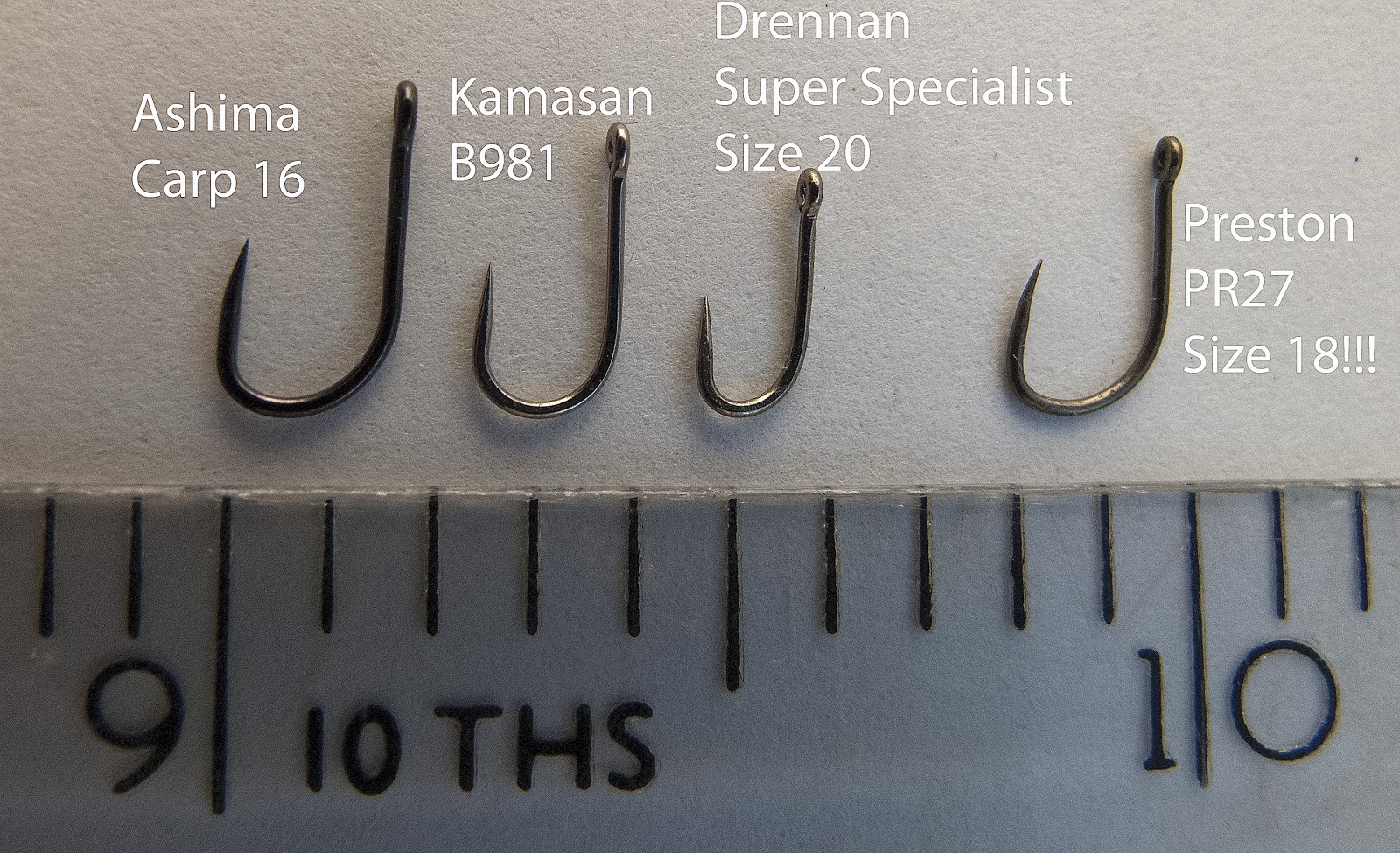
Now you are quite likely to be tying flies in the long dark evenings, you might like to see a small selection of hooks that are fast becoming the most useful to your faithful blogger for the most frequently used dry flies...


None of them are sold as fly tying hooks.  In England we are blessed with a thriving community of so-called "coarse anglers".  In the UK "Coarse" is the name given to any fish without an adipose fin.  Serious coarse anglers are very demanding and would never tolerate hooks that were not efficient and strong. 

These hooks are both efficient, strong and yet fine enough in the wire to let dry flies dressed on them float well.  The straight eye is perfect for setting the hook efficiently to gain the best hold.  They are barbless, so fish can be released far more quickly and with less harm done than is possible with barbed hooks.  The first three hooks on the left are reversed and this too adds to their hooking powers.

Most importantly, they are all forged hooks with the wire at the bend slightly flattened, so they do not straighten out, even in the smallest sizes.

The Ashima hooks are imported into the UK by Profish and I suggest you contact the nice man at Profish to buy them in fly tying quantities.

Kamasan and Drennan hooks are both from the same company, Drennan.  You will find these in most coarse fishing tackle shops and on eBay.

The Preston hooks are also found in most good coarse fishing shops and on eBay.

Ashima are available in bulk as well as in tens.  The others come only in those infuriating little packets and do work out quite expensive when compared with hooks available in bulk, but they are so superior to most hooks sold for fly tying that the extra cost is worth it, especially if you fish where the quarry can sometimes be a bit bigger and stronger than usual...

The rule next to the hooks in the picture shows up what a wide variation there is in the manufacturers' interpretations of sizes.  The Ashima and Kamasan hooks in the picture are both described as "Size 16".  The Preston is said to be "Size 18".  This is why it is important to choose hooks by your own sight to match the size of the flies you hope to mimic when you dress your artificials.


RR